
A mid-sized Acumatica VAR gets a call from a long-standing client asking for a custom integration between their Acumatica instance and a niche industry platform nobody on the VAR's team has touched before. Two years ago, the answer would have been a polite no, or a quote padded with enough uncertainty to discourage the ask. Today, a growing number of VARs are saying yes, then quietly bringing in a specialized development partner to actually build it. That shift says something specific about where the Acumatica ecosystem is headed.
What to know
Acumatica operates entirely through a partner channel, meaning VARs, not Acumatica itself, are responsible for implementation, customization, and ongoing client relationships.
Client demands for custom integrations and industry-specific functionality have grown faster than most individual VARs' in-house development capacity.
Bringing in a specialized development partner lets a VAR say yes to complex work without carrying the overhead of a full-time specialist team for projects that may only come up periodically.

Why Acumatica's Partner Model Puts Pressure on VAR Capacity
Answer first: because Acumatica sells exclusively through its partner network, every implementation, customization, and ongoing support relationship runs through the VAR, not through Acumatica directly. Acumatica's own description of its partner program confirms this structure explicitly, describing an international network of resellers responsible for evaluation, implementation, training, and ongoing support, alongside independent software vendors who extend the platform's base functionality. That model gives VARs direct client relationships and healthy margins, but it also means every custom request lands on the VAR's desk first, whether or not the VAR has the specific technical depth to handle it.
For a VAR with a broad but generalist team, an unusual integration request is more than extra work. It is a request that sits outside the team's proven expertise, which raises the risk of a delayed, over-budget, or poorly executed project landing on a client relationship the VAR has spent years building.
What Happens When a VAR Turns Down Complex Work
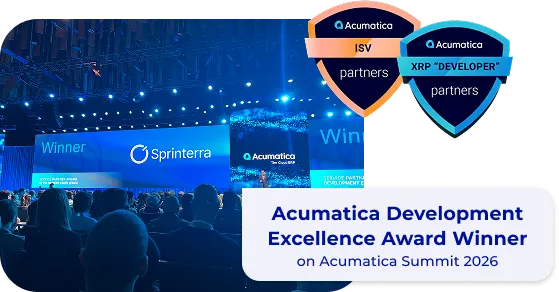
Turning down a request rarely ends the relationship outright, but it does open the door for the client to look elsewhere for that specific need, sometimes to a competing VAR, sometimes to a generic development shop with no Acumatica-specific experience at all. Either outcome puts a piece of the client relationship outside the original VAR's control. Sprinterra was built around exactly that gap: AI and Acumatica-focused development work that a VAR can bring in on a project basis, without having to build and retain that specialization internally year-round.
The alternative, hiring a dedicated specialist for a capability that might only be needed a few times a year, rarely pencils out financially for a VAR of moderate size. Underutilized specialized staff is one of the more common margin drains in a services business built around client-specific customization work.
Why More VARs Are Bringing in Specialized Development Partners
The VARs handling this well have generally landed on the same solution: keep the client relationship and the implementation ownership in-house, but bring in a specialized partner for the specific technical piece that falls outside the core team's comfort zone. Sprinterra's services for Acumatica partners is structured around that exact division of labor, working behind the scenes on the technical build while the VAR remains the client's primary point of contact throughout.
That arrangement lets a VAR say yes to a wider range of client requests without gambling the engagement on unfamiliar territory, and it lets the VAR present a broader capability set to prospective clients than the in-house team alone could credibly promise.
What This Looks Like From the Client's Side
Clients rarely know, or care, whether the work behind an integration was done by the VAR's own staff or a specialized partner brought in for the project. What they notice is whether the VAR said yes to their request, delivered on the timeline promised, and stayed responsive as the single point of contact throughout. A well-run partnership between a VAR and a specialized development partner is invisible from the client's seat by design, which is exactly the point.
That invisibility only holds up if the arrangement is handled well. A VAR that treats an outside development partner as a black box, handing off a request with minimal oversight and hoping for the best, risks exactly the kind of delivery problems the arrangement was supposed to prevent. The VARs getting the most value from this model stay closely involved in scoping and reviewing the work, using the specialized partner to extend their technical reach rather than to offload accountability entirely.

What This Means for VARs Weighing the Decision
The VARs still declining complex work are not doing so because the demand isn't there. They are doing so because building that capability internally looks expensive and slow, which is a reasonable read of the in-house option, but an incomplete picture of the choice actually available. Treating outside development capacity as a standing resource, rather than a last resort, changes the calculation from whether to take on complex work to how to deliver it without absorbing all the risk directly.
As client expectations continue to expand beyond what any single generalist team can credibly cover, the VARs positioned to keep winning larger, more technical engagements will likely be the ones who stopped treating specialized outside help as an admission of a gap, and started treating it as part of a normal delivery model.
The VARs already operating this way tend to describe it less as outsourcing and more as extending their bench on demand, a distinction that matters for how confidently they can quote and commit to complex work in the first place. It also changes how a VAR sells itself to prospective clients, since a broader honest capability list, backed by a reliable delivery partner, tends to win more competitive evaluations than a narrower list built entirely around what the in-house team alone can guarantee.
Work produced and reviewed by the Article Forge Hub editorial desk. Every piece published under this byline has been read against our sourcing, disclosure and correction standards before it went live. Corrections and enquiries are handled by the desk directly.
View all posts by Article

